0x

Completion

Adaptive individual conversations can multiply completion by 4 versus declarative formats in anonymized enterprise cases.

HR Tech

Employee Survey Limitations: What HR Teams Still Miss

Why employee surveys miss real workforce signals, where the data breaks, and how adaptive conversations help HR build living organizational memory with trust.

By Mia Laurent11 min read
Share

Your board asks why engagement is down. Your managers say they are listening. Your HR dashboard has scores, heatmaps, and verbatim comments. Yet the same questions keep returning: why are strong people leaving, why do some teams transmit know-how faster than others, and why do employees tell managers one thing while exit interviews reveal another?

That is the practical problem behind employee survey limitations. The issue is not that surveys are useless. The issue is that many organizations use them as if a periodic form could explain a living system.

A survey can measure declared sentiment at a point in time. It cannot, by itself, reveal the full context behind that sentiment: the local practices, managerial habits, informal workarounds, trust conditions, and team-specific knowledge that shape daily work. For a CHRO or CEO, that distinction matters because the most valuable workforce signals rarely arrive as clean ratings.

What are the main employee survey limitations?

Employee survey limitations are the structural weaknesses that appear when organizations rely on standardized, periodic, self-reported forms to understand work. They include low or uneven participation, response bias, weak context, delayed analysis, poor actionability, and the loss of qualitative knowledge that employees would share in conversation but not in a form.

Most competing articles on the topic describe pros and cons, annual survey fatigue, or the failure to act after results. Those are real problems. But they miss the deeper one: the survey format shapes the data before HR ever analyzes it.

When the question is narrow, the answer becomes narrow. When the campaign runs once or twice a year, the organization sees late. When the output is a score, leaders often debate the score instead of learning from the work behind it.

Why traditional employee surveys break down

The first limitation is timing. A survey captures a declared state during a campaign window. Work does not happen in campaign windows. A store team may be under pressure after a new rollout. A manufacturing team may have found an effective onboarding ritual. A support team may be losing senior people because escalation rules are unclear. By the time the survey closes, the signal may already be cold.

The second limitation is standardization. Standard questions make comparison easier, but they also flatten difference. A five-point response to "I have the tools I need to do my job" means different things in retail, healthcare, services, and technology. It may refer to staffing, software access, manager availability, training, or emotional bandwidth. Without follow-up, HR sees the symptom but not the mechanism.

The third limitation is trust. Employees know that surveys are not neutral experiences. They ask themselves who will see the answer, whether their manager will recognize their wording, whether negative feedback will create consequences, and whether anything changed after the last campaign. Social desirability bias is well documented in self-reported research: respondents tend to answer in ways that look acceptable to others, especially on sensitive topics. That does not make employees dishonest. It means the format carries social risk.

The fourth limitation is action. Survey outputs often travel through dashboards, presentations, and manager cascades. The data is summarized before the organization has understood it. Leaders receive averages. Managers receive areas for improvement. Employees receive a message saying "we heard you." But the organization may still not know what to do differently on Monday.

Compare survey alternatives for employee voice programs

The data problem behind survey fatigue

Survey fatigue is not only about asking too many questions. It is about asking questions that employees do not believe will change anything. Once employees learn that feedback disappears into a reporting cycle, participation becomes a calculation: is this worth my attention?

Gallup reported in its 2025 State of the Global Workplace coverage that global employee engagement fell from 23% to 21% in 2024, with manager engagement falling from 30% to 27%; Business Insider’s coverage of the report also notes Gallup’s estimate of $438 billion in lost productivity linked to the decline. The point is not that another survey would fix engagement. The point is that leaders need sharper ways to understand what is changing inside teams before the decline becomes a lagging metric.

This is where many HR analytics programs reach a ceiling. They improve reporting without improving signal quality. A clean dashboard built on thin data remains thin. More frequent pulse surveys may reduce delay, but they do not remove the format problem if employees still choose from fixed answers and add optional comments at the end.

The same concern appears in broader debates about workplace technology. Public discussions on X in April 2026 around remote work, performance reviews, LLM-enabled talent development, employee training, and HR chatbots show a consistent tension: people want faster, more personalized workplace support, but they worry when human context disappears behind tools. Those discussions are not a scientific sample, yet they reflect the trust issue HR leaders face every day: employees may accept technology when it helps them be heard; they resist it when it feels extractive.

Sources: Business Insider on Gallup’s 2025 workplace report, X discussion on remote work and AI, X discussion on performance reviews, X discussion on talent development, X discussion on HR chatbots, X discussion on employee training.

Survey scores are not the same as organizational knowledge

A score tells you that something is happening. It does not tell you how work is really done, which local practices create performance, or which weak signals are spreading across teams.

This is the missing layer in many employee engagement surveys: craft knowledge. In every organization, some teams have found better ways to onboard, sell, coordinate, handle difficult customers, transmit standards, or keep experienced people engaged. That knowledge is often invisible to HR because it lives in conversations, habits, and team routines rather than in formal documentation.

A survey might reveal that one region has stronger engagement. It will rarely reveal the specific managerial ritual that makes new starters productive faster, the peer coaching pattern that reduces stress, or the informal language employees use to explain friction. Those details matter because they are transferable. They are the difference between measuring a gap and teaching the organization how to close it.

This is why the next step is not "more questions." It is better capture of qualitative employee data.

What works better than a standard employee survey?

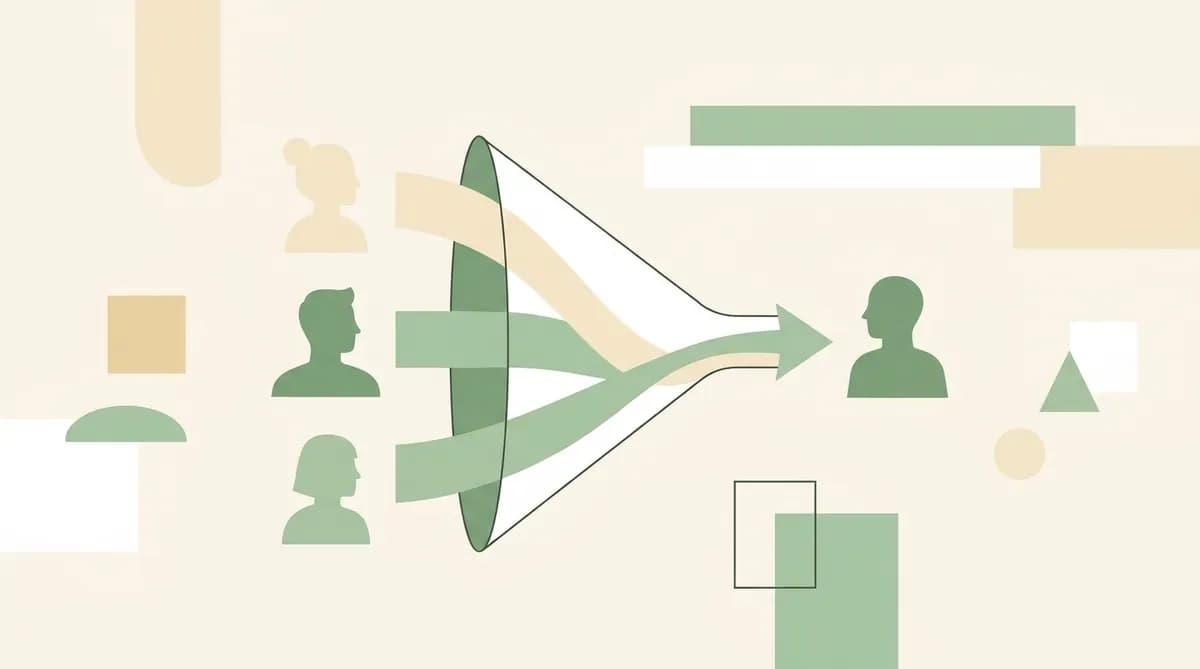
A stronger approach uses adaptive individual conversations to capture employee experience in context, continuously and safely. Instead of forcing every person through the same fixed form, the conversation follows the employee’s answer, clarifies meaning, captures examples, and turns recurring patterns into qualitative signals leaders can act on.

The difference is not cosmetic. In a form, an employee selects "disagree." In a conversation, the system can ask what makes the issue difficult, when it happens, what the employee has tried, who is affected, and what would make the work easier. The answer becomes a signal with context.

For HR, this changes the data model. Employee voice is no longer a collection of isolated survey rows. It becomes a living memory: a structured, searchable body of employee conversations that preserves nuance while protecting confidentiality. Leaders can ask: what do high-performing teams do differently? What friction appears during onboarding? Which reasons for leaving are emerging before resignation? What knowledge should be transmitted to other teams?

That is the shift from engagement measurement to Craft Intelligence: turning employee conversations into living memory, making the organization queryable, revealing the specific know-how of the best teams, and transmitting it to the teams that need it.

Nothing is decided by the signal alone. The role of the system is to inform human judgment, not replace it.

See how organizational intelligence makes work queryable

A concrete anonymized example

In a large distributed workforce, HR had enough engagement data to know that some teams were struggling with retention and others were performing better under similar constraints. The survey results showed variation, but not the reason for it. Managers had explanations, but those explanations depended on who was speaking and how close they were to the field.

The organization moved from a declarative format to adaptive individual conversations. Employees could speak in their preferred language. The conversation adapted to their role, their context, and the issue they raised. The goal was not to inspect individuals. It was to understand patterns in work: what made onboarding difficult, where communication broke down, which managers created clarity, and which local practices helped teams stay effective.

The strongest signal was not a complaint category. It was the discovery that some teams had developed practical routines for transmitting know-how: how to brief new people before busy periods, how to pair experienced employees with new starters, how to explain standards without overwhelming them, and how to keep feedback close to the work.

Once captured, those practices could be turned into targeted content for other teams: short written guides, manager briefings, audio formats, or vertical video depending on how employees actually consumed information. The organization was no longer only measuring engagement. It was learning from itself.

4xcompletion

In an anonymized case, completion multiplied by 4 by moving from declarative formats to adaptive individual conversations.

Anonymized case

Discover how organizations are capturing these signals at scale

Where surveys still belong

It would be a mistake to remove surveys entirely. They still have useful roles when the question is narrow, comparable, and not too sensitive. Compliance checks, specific policy feedback, and high-level trend measurement can work well in survey form.

The problem begins when surveys become the main listening architecture. A CHRO needs both measurement and meaning. Scores help prioritize attention. Conversations explain what the organization should learn, change, or transmit.

A practical model is to use surveys for standardized comparison and adaptive conversations for depth. The survey asks, "Where should we look?" The conversation asks, "What is actually happening there?" The living memory then allows HR and leaders to reuse what they learn instead of starting from zero in every campaign.

This matters across the employee lifecycle. In exit interviews, employees often share the clearest context only when trust is high. In onboarding, the most useful signal may be the moment a new starter stops understanding what is expected. In performance reviews, the issue is often not the rating but the quality of the conversation around growth, feedback, and expectations.

Exit interviews are a particularly well-suited use case

How to reduce employee survey limitations

Start by separating measurement questions from learning questions. If you need a benchmark, use a survey. If you need to understand cause, context, or transferable practice, use conversation.

Second, design for trust before designing for analytics. Employees should understand what will be captured, how confidentiality works, who can access aggregated signals, and how human decisions remain human. Trust is not a paragraph at the start of a campaign. It is the operating condition for useful employee voice.

Third, preserve qualitative data instead of over-summarizing it. Many systems destroy the most valuable information by compressing it too early into themes. A living memory should keep the underlying context available in a governed way, so leaders can ask better questions later.

Fourth, close the loop through transmission. Listening without transmission creates fatigue. If the organization learns that one team has a better onboarding practice, that knowledge should reach the teams that need it, in a format they will actually use.

Finally, evaluate signal quality, not only completion. Completion matters because silence creates blind spots. But the real test is whether the data helps leaders make better human decisions: what to fix, what to protect, what to teach, and what to stop doing.

The CEO question: can your organization learn from itself?

The real limitation of employee surveys is not methodological. It is strategic. A company that only collects scores learns slowly. A company that captures employee conversations, protects trust, and turns what it learns into living memory can teach itself.

That does not mean every employee interaction becomes data. It means the moments that matter are captured with consent, context, and purpose. It means the organization can ask better questions of its own experience. It means the best local know-how does not stay trapped in the best local teams.

For HR leaders, the next frontier is not another dashboard. It is a workforce listening system that respects people enough to hear nuance and serves the business enough to transmit what works.

Employee surveys can still play a role. But they should no longer carry the full weight of understanding the organization.

Ready to hear what your employees actually think?

Join the organizations turning employee conversations into living memory.

Ready to see the full loop?

One population. One business question. One measurable output.

More from Blog